
- Gap in market, where there’s no voice in terms of unity and family-based animation IPs
- Untapped opportunity for collaboration between studios for connectivity, funding and capital

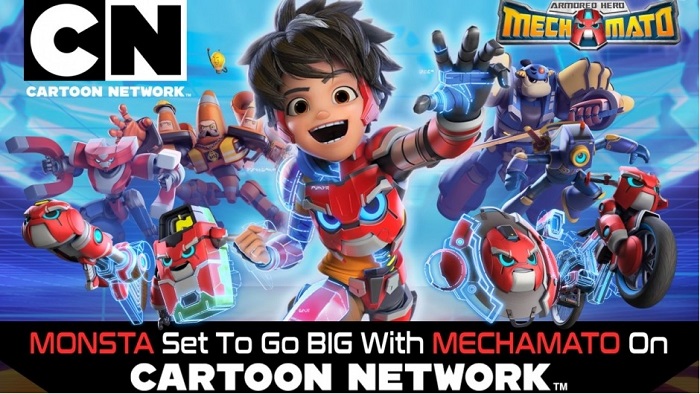
Indonesian animation hit, Jumbo, did more than light up its home market with over 1 million tickets sold in one week upon its 31 March release, becoming the best selling Indonesian animation film in the process. As of April, it also became Southeast Asia’s top-grossing animated title with more than US$8 million ticket sales, surpassing Malaysia’s 2022 hit Mechamato.
By coincidence, two key figures in Jumbo and Mechamato, Anggia Kharisma, Chief of Content at Visinema studios, and co-producer of Jumbo and Nizam Razak, co-founder and Managing Director of Animonsta (Monsta) Studios which produced Mechamato were on the same panel on Sept 4 at the ASEAN Digital Content Summit, organised by Malaysian Digital Economy Corporation in Johor Bahru, Malaysia. Joining them on the panel speaking about “From Scene to Screen: ASEAN’s Animation Stories Take the Spotlight” was Mandy Lalita Homsangpradit, content and sales director for T&B Media Global Co Ltd from Thailand.
The conversation revolved around building trust in themselves, their creations; focusing on talent and then exploring and figuring out cross-border execution.
Anggia put it frankly: “The biggest challenge was actually trust, from ourselves, and from the investors, because not everyone really believed in us.” She credited a 420-strong, all-Indonesian crew and a production slog of more than five years to get the film over the line. But it has all been worth the pain, the slog and doubt, as the film has played in over 30 countries so far, underscoring market appetite when quality and story come together.
The key to success lay in the story. “It starts from the story and the characters; the story is the backbone of everything. We created a story that is for kids, and for the child inside us,” Anggia said. Interestingly, her studio, Visinema, estimates that 69% of kids in ASEAN have a strong voice and influence in the family. And so, “If you want the green light [to go watch a movie], remember whose vote swings the household.” she quips.

From action and kids to the family
For Nizam, best known for the BoBoiBoy and Mechamato animations series, the latter which won the Anime Fan Award at the Tokyo Anime Award Festival (TAAF) 2023, Anggia’s “for the child in us” comment resonates with a market gap he sees. “Family is very important in Southeast Asia, yet there’s a gap. Animation shows should not just be about action or specifically targeted at kids. There is a gap in regards to ASEAN produced family-based IPs (Intellectual Property).”
Still, that collides with box office reality. “Whether they watch Hollywood animation, or your animation, it’s going to cost the same… so how do you convince them? Therefore, the quality has to be matched, including the storytelling.”
On licensing and merchandising, Nizam has experienced what a tough sell it is to approach established US and Japanese players as they will prioritise famous IPs with existing strong brand recognition in this region. His answer has been to build more of the monetisation stack in-house with content, digital channels, licensing, merchandise, so that costs can be recovered across various formats.
The ASEAN edge beyond standard co-production
All three panellists also agreed that ASEAN content had much to offer the world, and that ASEAN animation needed to do much more to collaborate, drawing on the respective countries’ strengths.
For Anggia, collaboration is not optional. “We can collaborate with many studios in ASEAN, not only in creativity, but for funding and capital as well.”
Nizam suggested the collaboration should go beyond traditional studio-to-studio co-production to creating collaboration based on identifying ecosystem strengths, for example utilising Vietnam’s strength in games development to have Malaysian IP leverage Vietnam’s game development expertise.
It is an established model in the film industry, so why not in the animation sector as well, said Nizam who shared that Animosta already does this. “We do post-production in Thailand, use Indonesia for the music arrangement, and Singapore for distribution and marketing.” Panellists also identified some quick wins like sharing senior talent and voice actors across borders.
Nizam said that when Animonsta boosted Indonesia’s Jumbo on social media, the X post drew about one million views and some 20,000 shares. “Why can’t we do more of this to support each other?” The point being that regional studios can materially lift each other’s launches.
There was also the wish that the respective governments would see value in this greater sharing and lend their support.

Policy that matches ambition
The panelists were explicit that policy matters, good policy. Nizam pointed to Malaysia’s long-running policy focus on creative content/digital content with some modest funding over the past two and a half decades and augmented with structured mentorships that helped studios learn, and scale. Mandy added a timely Thai note: authorities are, she was told “just yesterday,” (Sept 3, the day before the panel) preparing to extend cash-rebate support to animation co-productions — a lever that could tilt more ASEAN work into Bangkok.
Anggia’s hope was to see the introduction of a shared funding compass so ASEAN studios can collect and use market data together, then commit to original IP and really stress on long-run talent development.
This was always a long play. Nizam recalls that around the mid 2000s urging the government to support the creative digital content industry to move it from being mere outsourced partners of IP owners to building their own IP to share to the world. “Support us but note that that is a 15 to 20 year journey for us to be world class.”
That journey still continues for ASEAN’s animation studios. Hopefully the conversations around the ASEAN Digital Content Summit 2025 will inject greater urgency and realisation that the end goal can be achieved quicker with greater collaboration among its creative animation leaders.
Related Articles
Keyword(s) :